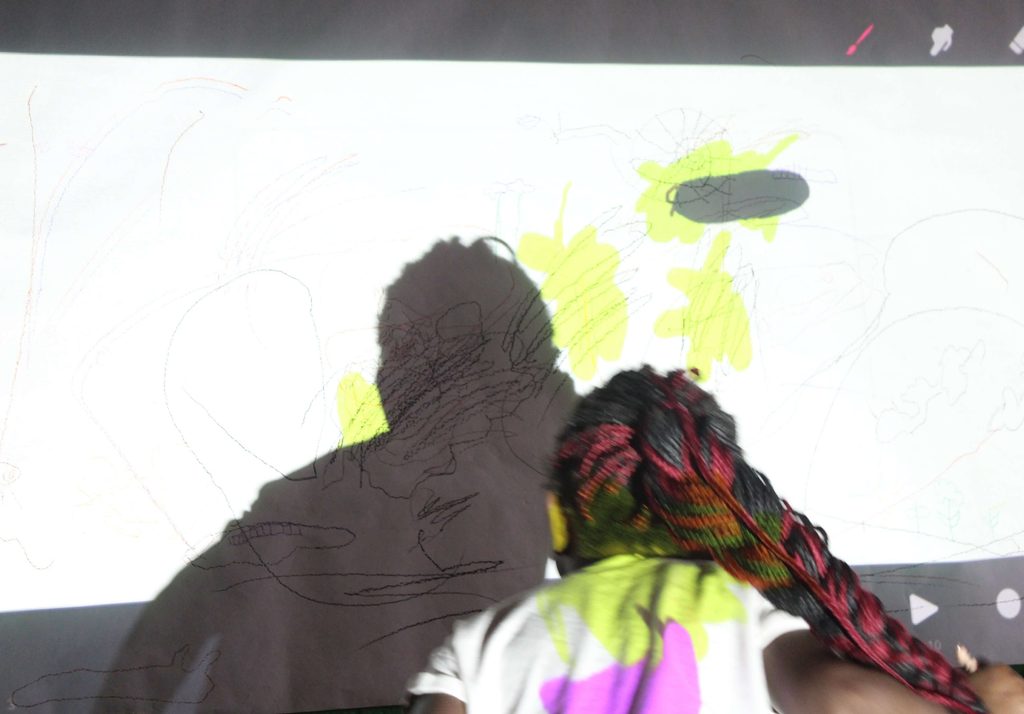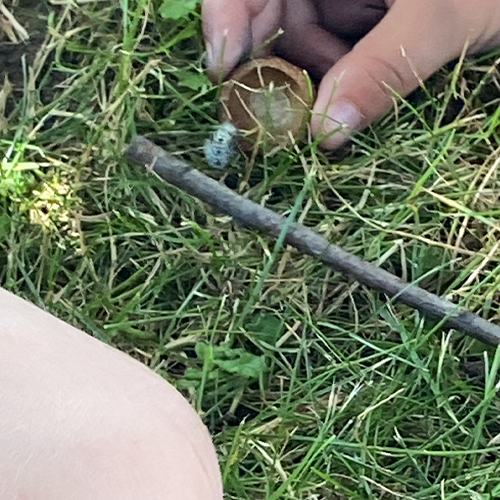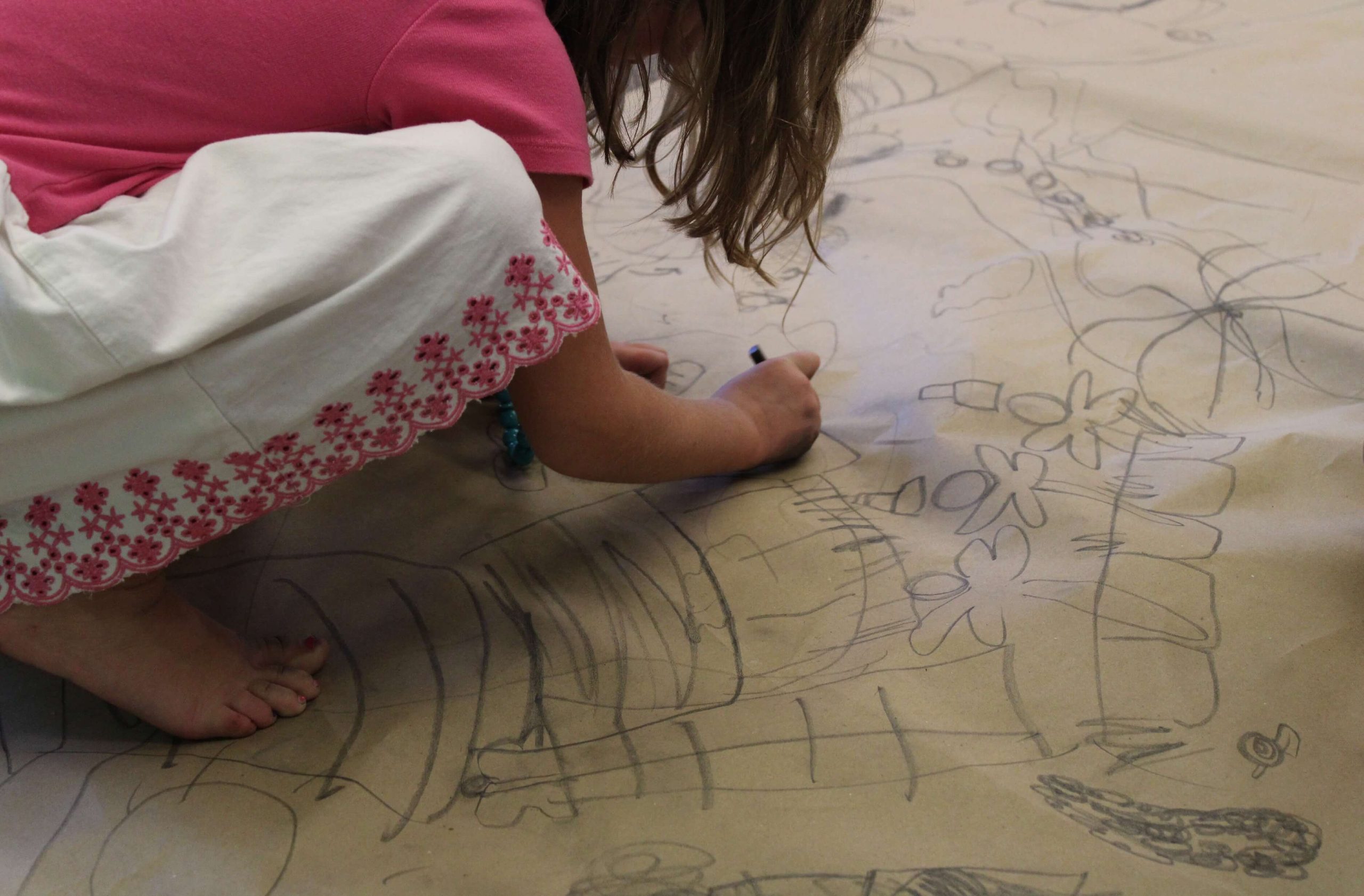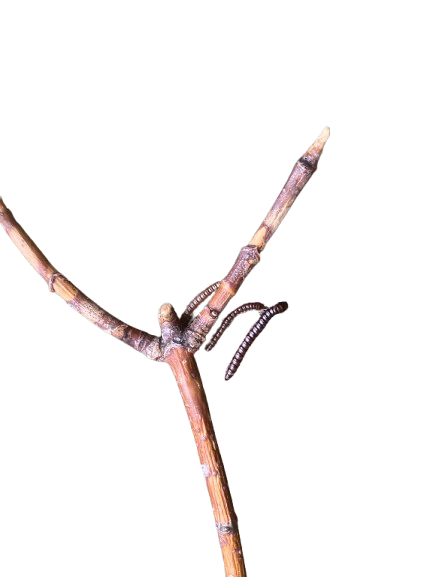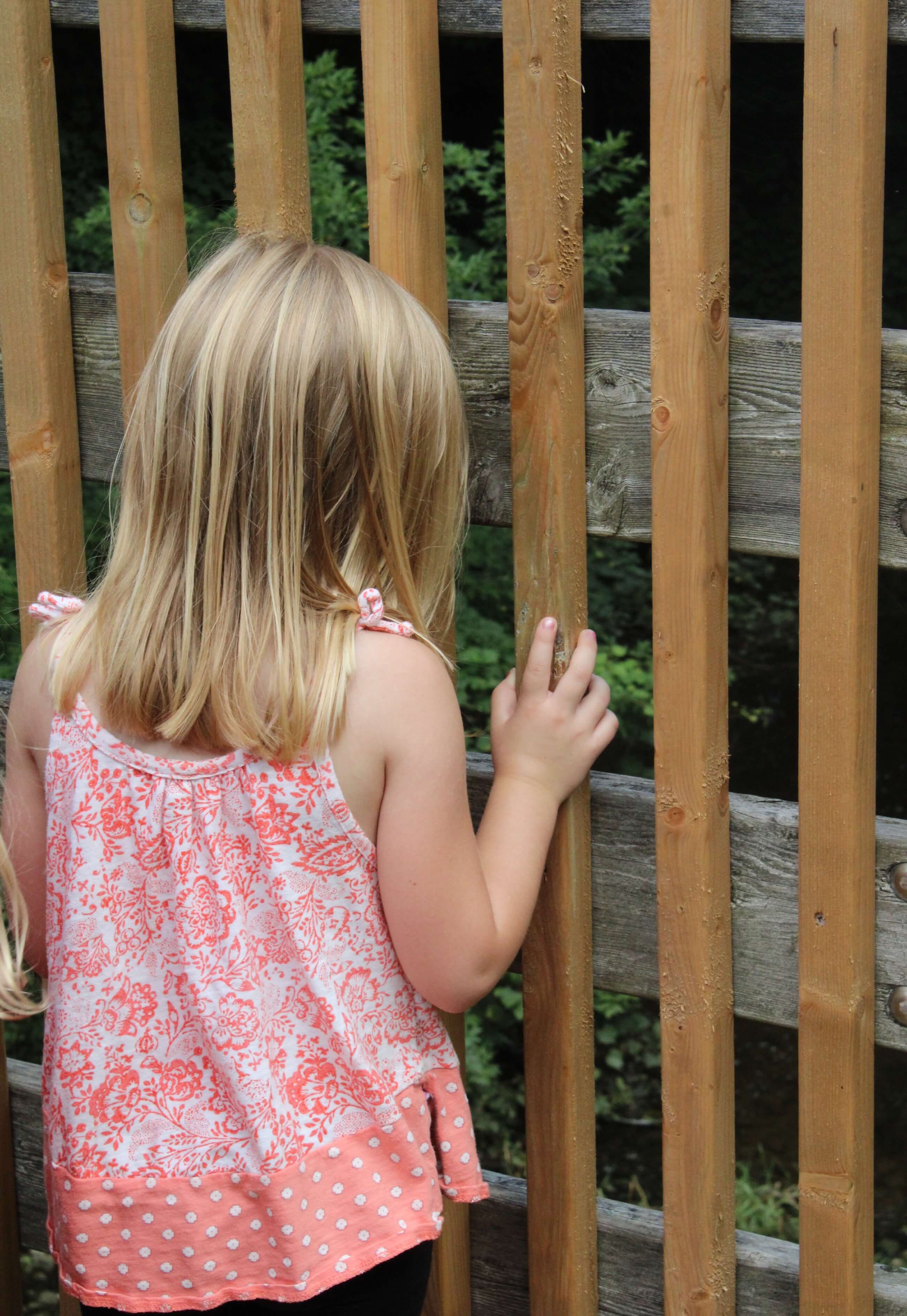
This page is an invitation to encounter research data through a sonic and visual composition. The images and sounds gathered here do not necessarily tell us what happened. Rather, they carry traces of memory, movement, and the inquiries that unfolded through our work together with children. These traces are not simply preserved in the recordings but are also made and remade through their arrangement, repetition, and return.
Our inquiry followed a seemingly mundane question: Where do bugs go? Set against the intentions of our original research questions, this question created openings through which other questions emerged. As we followed the children’s curiosities, our collective attention shifted and became more complex, bringing us into different relations with the creatures, places, and infrastructures of their city. What began as a question about where bugs might go became an occasion for noticing and attending to relations that our research questions had not anticipated.
In composing this page, I have been thinking about what becomes possible when research data are composed for interruption rather than interpretation. What interests me is not necessarily how sounds might explain an encounter or represent what happened, but how their arrangements might interrupt familiar ways of encountering research data. The sounds do not necessarily correspond to the images or particular events. Instead, their repetition, overlapping, and circulation create possibilities for encountering the research otherwise. This composition is itself a partial arrangement, shaped by my decisions about what to include, repeat, and place alongside one another.
I invite you to play around with this composition. Play a sound, pause it, or leave it looping on repeat. Turn one sound down and another up. Let sounds overlap, interrupt, or accompany one another. Play them all at once, or spend some time with just one. There is no particular sequence to follow, no correct way to listen, and no single account to arrive at.
Perhaps something becomes noticeable through repetition, interruption, or quieting. Perhaps the sounds become indistinguishable from one another, or perhaps you move on without listening to them all. These, too, are possibilities within this composition.
This offering does not seek to reproduce the children’s inquiry or invite visitors to experience what the children experienced. Rather, it creates another occasion for encountering some of the movements, memories, and relations that continue to circulate through the research.