
Children Co-Design Cities of the Anthropocene (CCCA) was a collaborative research project carried out at the London Bridge After School Program in Dorchester, Ontario. It unfolded alongside children, educators, and researchers—attending to the ways children are already entangled with the textures of urban life. This project did not begin with a question about the future, but with a commitment to the present—to the lived childhoods, situated subjectivities, and multispecies relations that compose the everyday.
Why Cities, Children, Now?
CCCA emerges from a growing need to think differently about how we live, design, and dwell in cities shaped by ecological precarity, infrastructural expansion, and more-than-human complexities. The project invites us to take seriously children’s ways of sensing and relating—not as symbolic gestures or future-oriented investments, but as active contributions to the pedagogical and ecological life of cities.
Children are not future citizens in waiting. They are already living their childhoods—already participating in the rhythms, disruptions, and possibilities of urban worlds.
Common Worlding, Digital
Design and Sonic Speculative
Informed by reconceptualist childhood studies, post-qualitative inquiry, and common world pedagogies, this project approached children not as isolated individuals, but as relational subjectivities, shaped through intractions with land, sound, infrastructure, and more-than-human others.
Participation here is not a measure of voice or agency. It is a matter of relation—of being-with, moving-with, sounding-with, speculating-with. Public pedagogy, in this context, becomes a method of staying attuned to the ways knowledge, place, and subjectivity are co-composed.

Methods
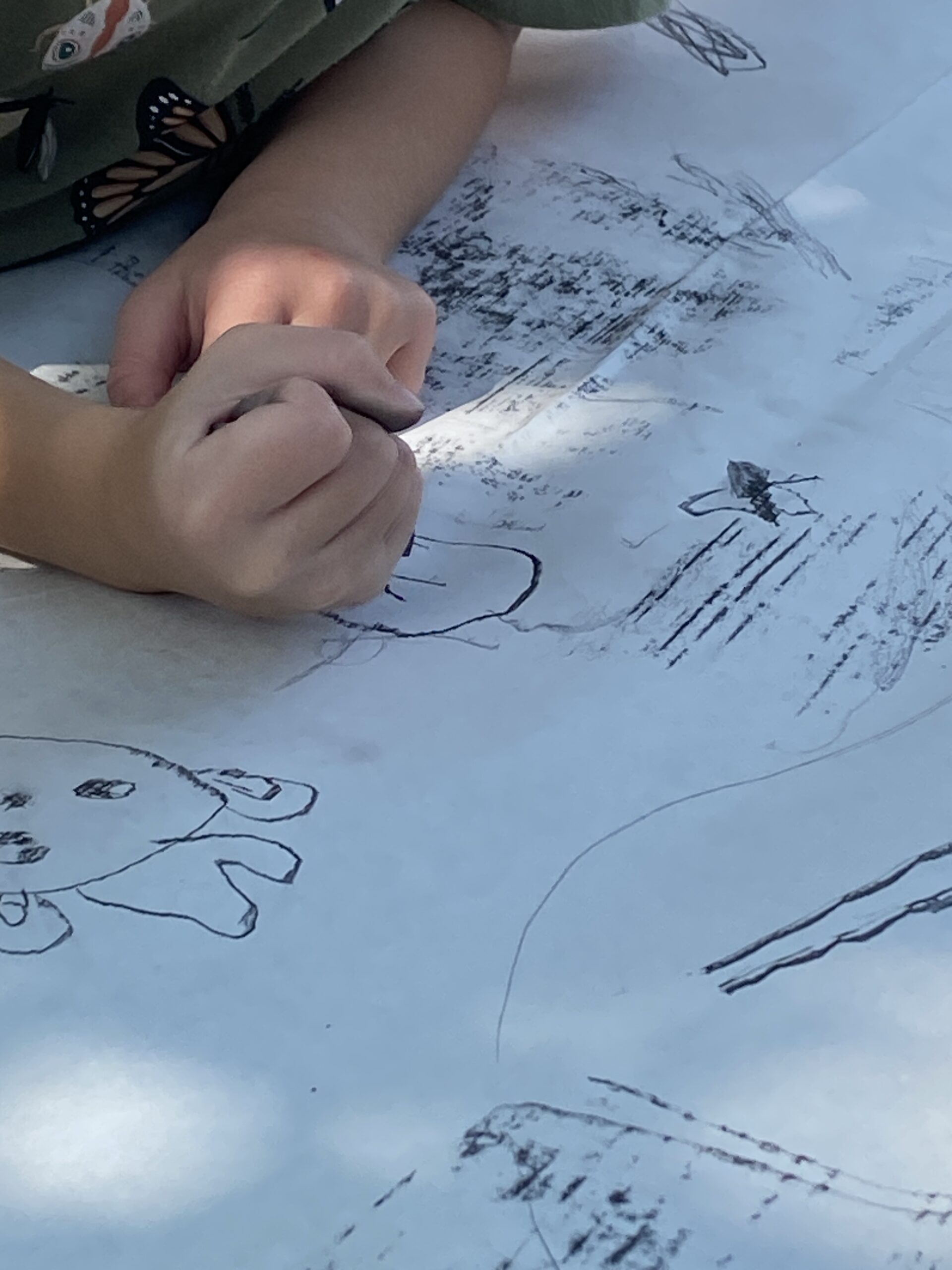
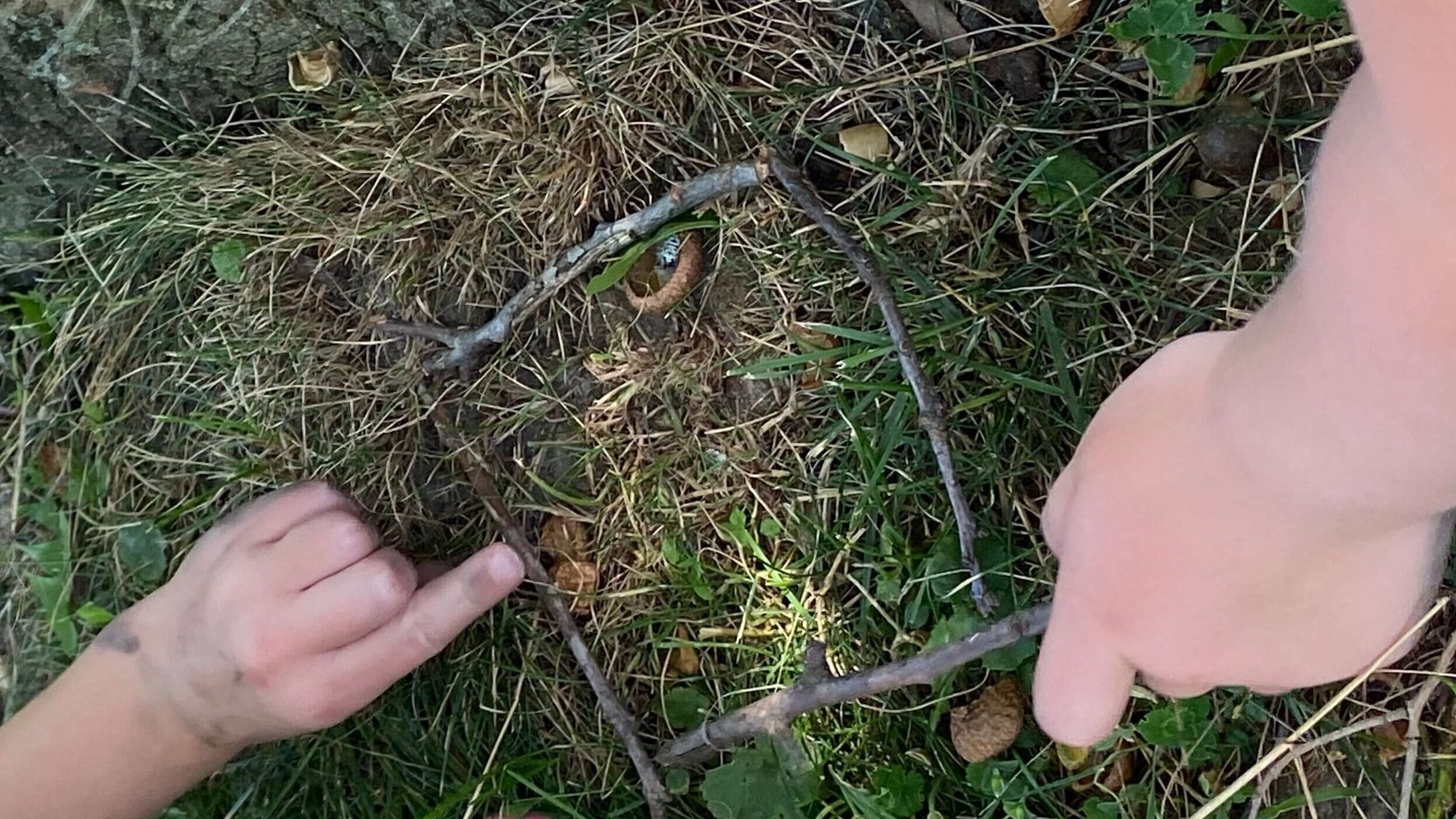
Over two weeks, we walked. We listened. We paused over the floating algae in the pond. We traced the pavement with our wings, followed dragonflies with our camera lense, and whispered stories into the earth.
Sonic composition, digital mapping, speculative storytelling, and material engagements were not tools but encounters—ways of noticing how urban life is lived differently when attended to through children’s movements and gestures.
Documentation became a pedagogical act: not to record, but to respond—to follow what emerged, to dwell with the fragments, to remain in the tension of the not-yet-known.
About this site
This website is not an archive of answers. It is a porous space for thinking-with the project—through sounds, images, texts, and pedagogical traces. It offers glimpses into the layered work of children co-composing city life and invites others to sit with the questions we are still carrying.
What does it mean to design cities not from above, but from below—beneath the leaves, along the pond’s edge, inside the speculative murmurs of a child’s story?
The Research Site
-
The Mill Pond

The Mill Pond in Dorchester, where this project took place, is embedded in a history that intertwines industrial ambition with the Thames Valley preservation efforts. The Mill Pond Committee describes the pond and the areas aroun it as a “historical landmark and a community focus for recreation and education.” The pond, which was maintained around
The Participants

Educators and
Children
of the London Bridge After School Program – Co-inquirers, soundmakers, storytellers, cartographers of urban imagination

Urban Policy
and Planners
of Middlesex county, Interdiciplinary participants
Research Team
Dr. Veronica
Pacini-Ketchabaw
Principle Investigator, Professor of Early Childhood Education in the Faculty of Education and Director of the Interdisciplinary Centre for Research in Curriculum at Western University in Ontario, Canada
Malvika Agarwal
Project Lead, Sonic Ecological Artist, and Doctoral Candidate at Western University