
After our initial encounter with the caterpillar, as the day began to loosen around us, I found myself back at the picnic bench with Kaitlyn and Lyndsay. The long sheet of paper was still stretched across the weathered wood, carrying the graphite traces of what we had been doing earlier. It felt like the bench was holding the encounter, calling us back into it. The caterpillar returned with us.
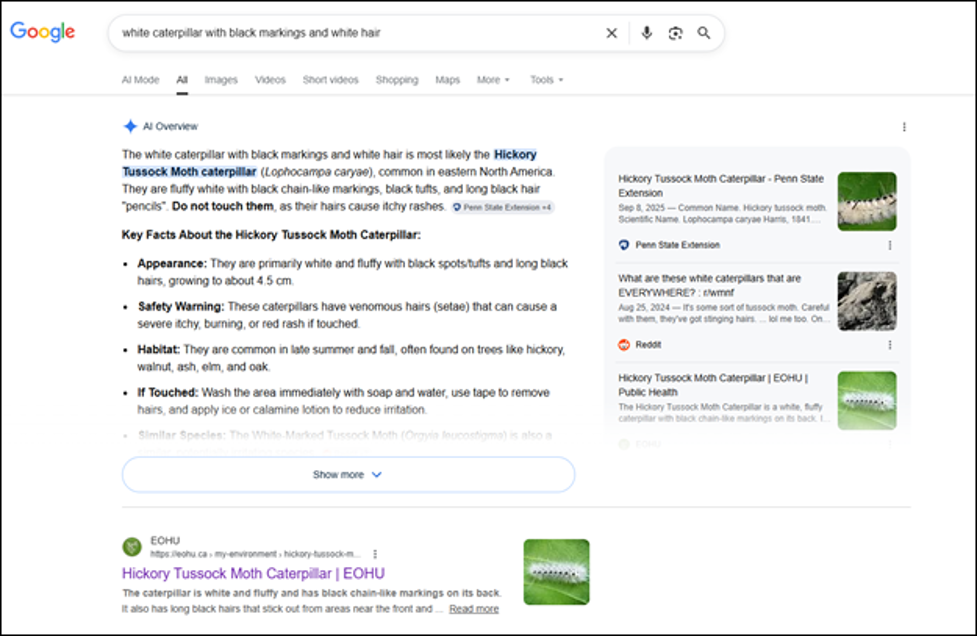
Kaitlyn checked a tablet. A quick search returned an image — a near match. The insect was identified as the larval stage of Lophocampa caryae, a species named by Thaddeus William Harris, a nineteenth-century economic entomologist.
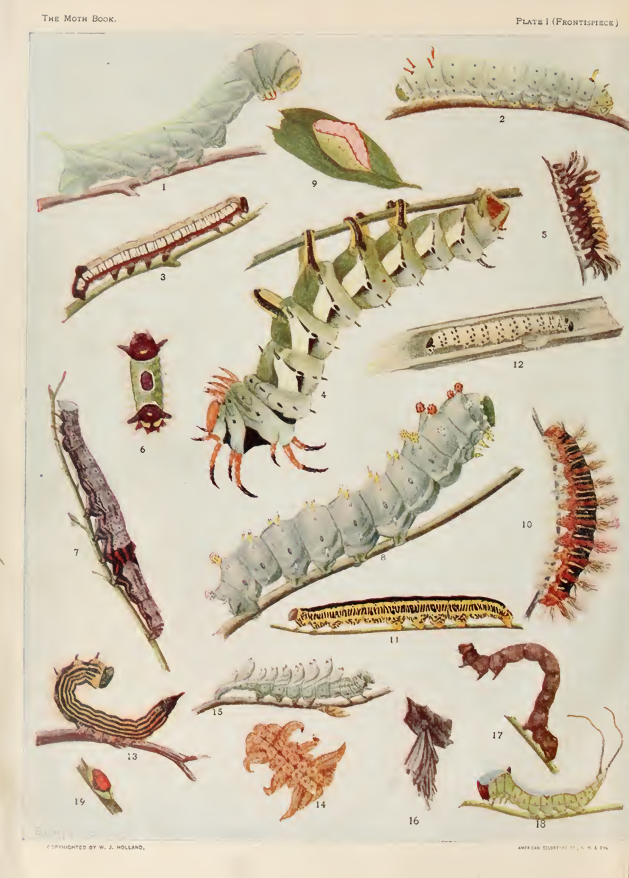
https://dn790001.ca.archive.org/0/items/mothbookpopularg00holluoft/mothbookpopularg00holluoft.pdf
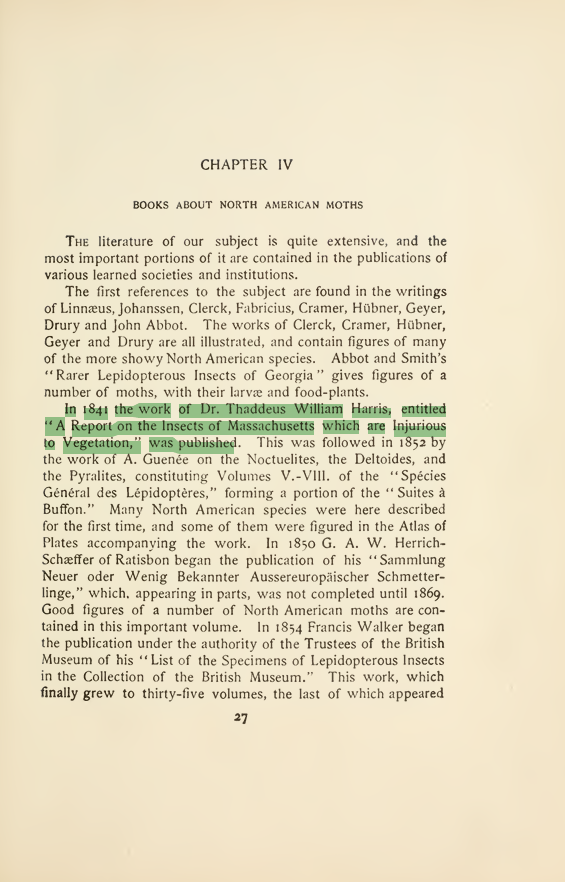
Economic entomology emerged from a particular way of seeing insects: a way of knowing shaped by agriculture, commerce, and human productivity. Insects were often understood through their relationship to human labour. Some were valued because they contributed to economies of cultivation — bees producing honey, silkworms producing silk. Others were classified as threats — locusts, caterpillars, and other creatures whose presence was measured through damage and loss.
Within this system, insects entered a ledger. They became useful or harmful, beneficial or destructive, depending on what they offered or took from human enterprise.
The idea that the caterpillar was simply “on its way” toward becoming something else lingered with us. It was easy to place it within a familiar developmental story: a larva becoming a moth, a child becoming an adult, a beginning moving toward a more complete future.
As Donna Haraway reminds us, lives are not only defined by what they eventually become but by the relations they create and inhabit along the way. Developmental thinking often asks us to look forward — toward outcomes, achievements, and futures — while overlooking the complex relations already unfolding in the present.
This logic appears everywhere in childhood spaces: in readiness assessments, developmental milestones, schedules, and educational structures designed around who children are expected to become. The future can become so powerful that it overshadows the life happening now.
The caterpillar invited another way of noticing.
As Lyndsay, Kaitlyn, and I begin wrapping up the field visit, we return to the picnic bench where traces of graphite still marked the surface. Earlier, children had been drawn toward the caterpillar’s movement, following its path with their drawings. The graphite lines remained as traces of an encounter — evidence of a moment when attention shifted from the human world toward another form of life.
The caterpillar returned to our conversation.
We had a name for it now: a hickory tussock moth caterpillar. Naming helped us locate it within scientific knowledge, but it did not explain the curiosity, uncertainty, and questions that emerged through our encounter.
Together, we searched.
We pulled out our phones, compared images, and wondered where this creature belonged within the wider ecology of this place. What did it eat? What ate it? Was it protected? Was it considered harmful? How did it participate in the life around us?
Tracing these relations, we realized many of us had already encountered its adult form. One educator remembered moths with translucent, off-white wings. Others recalled darker shades of brown and patterned bodies. These memories carried familiar stories: moths as unwanted visitors, creatures associated with damaged clothing and mothballs, beings that became noticeable only when they disrupted domestic spaces.
Yet this caterpillar offered another story.
We learned that the hickory tussock moth caterpillar carries venomous hairs and is commonly found in Southern Ontario during August and September. It lives across urban, suburban, and forested landscapes. Unlike some of its relatives, such as the rusty tussock moth, which can be more destructive to vegetation, the hickory tussock moth participates differently within local ecological relationships. It is part of a living network. The caterpillar feeds, grows, and becomes food for others. Birds and other avian species help regulate larval populations, distributing pressures across species and shaping the relationships that sustain local ecologies. Even within landscapes altered by human infrastructures, such as the Thames River and its dammed waterways, these relations continue to unfold.